What Chronic Stress Does to Your Brain
Most people treat stress like a temporary inconvenience — something that shows up before a big deadline, then disappears once the moment passes. But for millions of people, stress is no longer a visitor. It has moved in, unpacked its bags, and quietly started running the household.
Chronic stress is the kind that hums in the background of everyday life. It shows up as persistent anxiety, a sense of always being behind, difficulty sleeping even when exhausted, and an inability to relax even when nothing is visibly wrong. It lives in your body long after the original cause has passed — and it is far more damaging than most people realise.
What Chronic Stress Does to Your Brain
When you experience a threat, your brain activates its survival response. Your amygdala fires, cortisol and adrenaline flood your system, and your body gears up for fight, flight, or freeze. This is healthy and necessary — designed for dangerous moments, not daily life.
The problem is when this system never switches off. Research discussed by Thrive Global reveals that sustained cortisol exposure shrinks the hippocampus — the region responsible for memory and learning — while strengthening the amygdala's threat response. In plain language: the longer you carry chronic stress, the more your brain becomes wired to scan for danger even in safe situations.
This is why people under chronic stress often feel perpetually on edge, easily triggered, or emotionally reactive. They are not oversensitive. Their nervous system has been conditioned over months or years of unrelieved pressure to stay in survival mode.
How Stress Lives in Your Body
Stress is not just a mental experience. It lives in the body in very physical ways. Prolonged cortisol disrupts digestion, suppresses immune function, raises blood pressure, dysregulates hormones, and drives chronic inflammation. Many people who struggle with unexplained fatigue, frequent illness, tension headaches, or digestive issues are unknowingly experiencing the body's response to stress it has been carrying for far too long.
The body holds what the mind has not yet processed. Tight shoulders. A clenched jaw. Shallow breathing. Chronic tension in the hips. These are not random complaints — they are your body's language for emotional experiences that have not been fully released. At EnlightMeCenter, this connection between emotional experience and physical wellbeing is at the heart of everything we do.
The Energetic Toll You Are Not Talking About
Beyond the physical and neurological impact, chronic stress carries an enormous energetic cost. When your nervous system is chronically activated, it draws extraordinary amounts of energy simply to maintain that state of hypervigilance. This is why people under long-term stress often feel bone-deep exhausted even after a full night of sleep.
Sustained stress keeps your energy field contracted, guarded, and defensive. It makes it harder to experience joy, connect meaningfully with others, or feel the natural ease that becomes available when your system is no longer in survival mode.
Signs That Your Stress Has Become Chronic
Common signs include waking up tired regardless of how much you sleep, feeling irritable or overwhelmed by small things, struggling to concentrate, experiencing tension that never fully releases, finding it hard to enjoy things that once brought pleasure, and feeling disconnected from yourself and the people you love.
If several of these feel familiar, this is not simply who you are. It is your nervous system communicating that it has been carrying too much for too long.
Not sure how deep it goes? Take the free 2-minute Survival Mode Self-Check to see where you're holding the most weight. And you're far from alone: 40% of employees worldwide report a lot of daily stress.
When rest isn’t enough
Tired in a way sleep doesn’t fix?
The Heavy Energy Lift releases the stress, conflict and other people’s weight you’ve been carrying, so you feel like yourself again.
- Done remotely, wherever you are
- Performed personally by Steanie
- Personalized written report included
- All faiths welcome
$120 USD
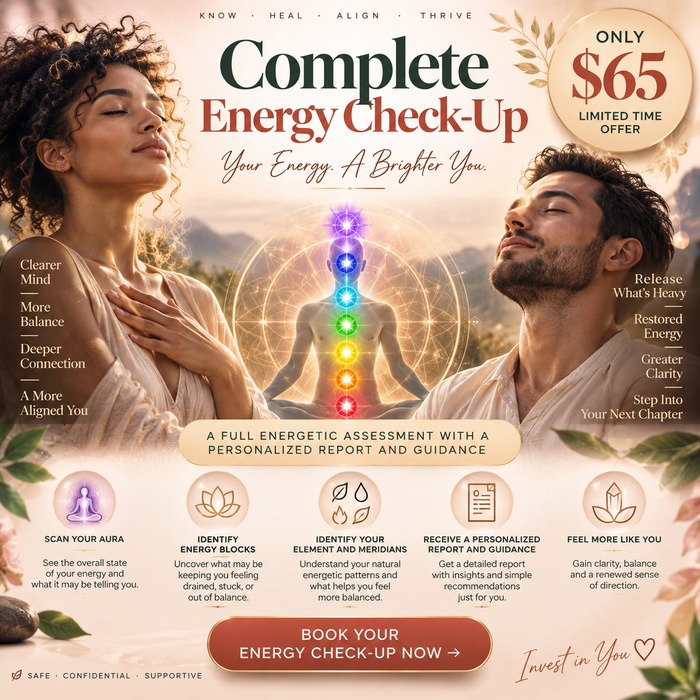
Book the Energy Lift →Not sure this is the one? Start with the $65 Full Energy Check-Up. Your $65 is credited toward any healing session booked within 14 days.
Where Recovery Actually Begins
Recovery from chronic stress is not about adding more to your plate. It is about creating the conditions in which your nervous system is finally allowed to soften. This starts with intentional breathing, reducing unnecessary stimulation, protecting your sleep, and building boundaries around your energy and time.
Deeper recovery often requires working through the emotional roots that have kept your nervous system activated. This is where practices like guided meditation, energy healing, and emotional healing sessions become truly transformative — not as quick fixes, but as a sustained return to yourself. You can explore our healing services at EnlightMeCenter and find the right starting point for where you are today. You have been carrying this long enough.


Go deeper
Protect: Put Boundaries Around Your Energy
Recovery starts when you stop leaking energy to everything around you. Protect by I Am Steanie helps you shield your energy, set sacred boundaries, and let your system finally soften.
Get the book · $11