What Regulated Living Actually Feels Like
Free · 1 minute
Signs tend to show up when you’re running on empty.
Are you burned out, or just tired? Eight quick questions give you your score and the support that fits.
Take the free Burnout Test →A grounding beginning
After all the work. All the awareness. All the cycles. All the pauses. What does regulated living actually feel like? Not the fantasy version. The real one.
It feels ordinary
Regulated living doesn’t feel euphoric. It feels steady. Your days may look simple: you wake up, you move through responsibilities, you rest. There’s less drama. Less urgency. Less emotional whiplash. And that ordinariness is freedom.
It feels spacious
There is space between stimulus and response, emotion and reaction, conflict and collapse. Space feels like breathing room, clarity, and choice. You are no longer fused with every feeling.
It feels flexible
Regulation doesn’t mean rigid calm. It means flexibility. You can feel anger without exploding, feel sadness without shutting down, feel stress without spiraling, and handle change without collapse. Emotions move through. They don’t define you.

It feels sustainable
You don’t crash as often. You don’t need chaos to feel alive. You don’t overextend to feel valuable. Energy becomes more predictable. Rest becomes normal. Ambition becomes intentional — not adrenaline-driven.
It feels relationally steady
Relationships become less dramatic, more reciprocal, more communicative, and less exhausting. You don’t chase intensity. You value consistency.
It feels self-trusting
Perhaps most importantly, regulated living feels like trust. You trust your reactions, your boundaries, your recovery, your capacity, and your pace. Even when life is imperfect.
What it does NOT feel like
It does not feel like perfection, emotional numbness, constant bliss, or absence of challenge. Life still brings stress. But stress no longer defines your baseline.
The quiet power of regulation
Regulated living is quiet power: steady breath, clear boundaries, flexible emotion, sustainable energy, and internal safety. It doesn’t demand attention. It simply holds you.
Not sure what you need?
Find out what your energy is telling you.
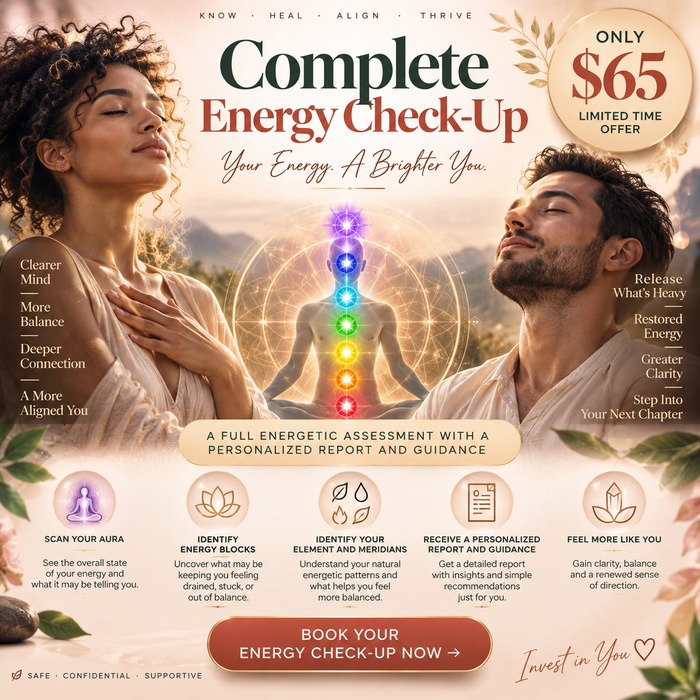
The Full Energy Check-Up maps your aura and all seven chakras, with a full intuitive reading and a written report showing exactly what to focus on next.
- Done remotely, wherever you are
- Performed personally by Steanie
- Personalized written report included
- All faiths welcome
$65 USD
Book the Check-Up →A compassionate closing
Healing was never about becoming someone else. It was about returning to yourself — without survival running the show.
Regulated living is not dramatic. It’s grounded. And grounded is strong.
Research on a steady baseline echoes this: the role of the vagus nerve in calming the body shows how regulation becomes physical, not just mental.
If this resonated, understanding what it feels like to finally feel safe in your own body is a grounding next step.
Ready to support your nervous system? Begin with our free 5-Minute Emotional Reset, or explore ALIGN to keep returning to your steady center. You can also bring this intention into your space with the Alignment Over Approval framed poster.